
Summer Balcony

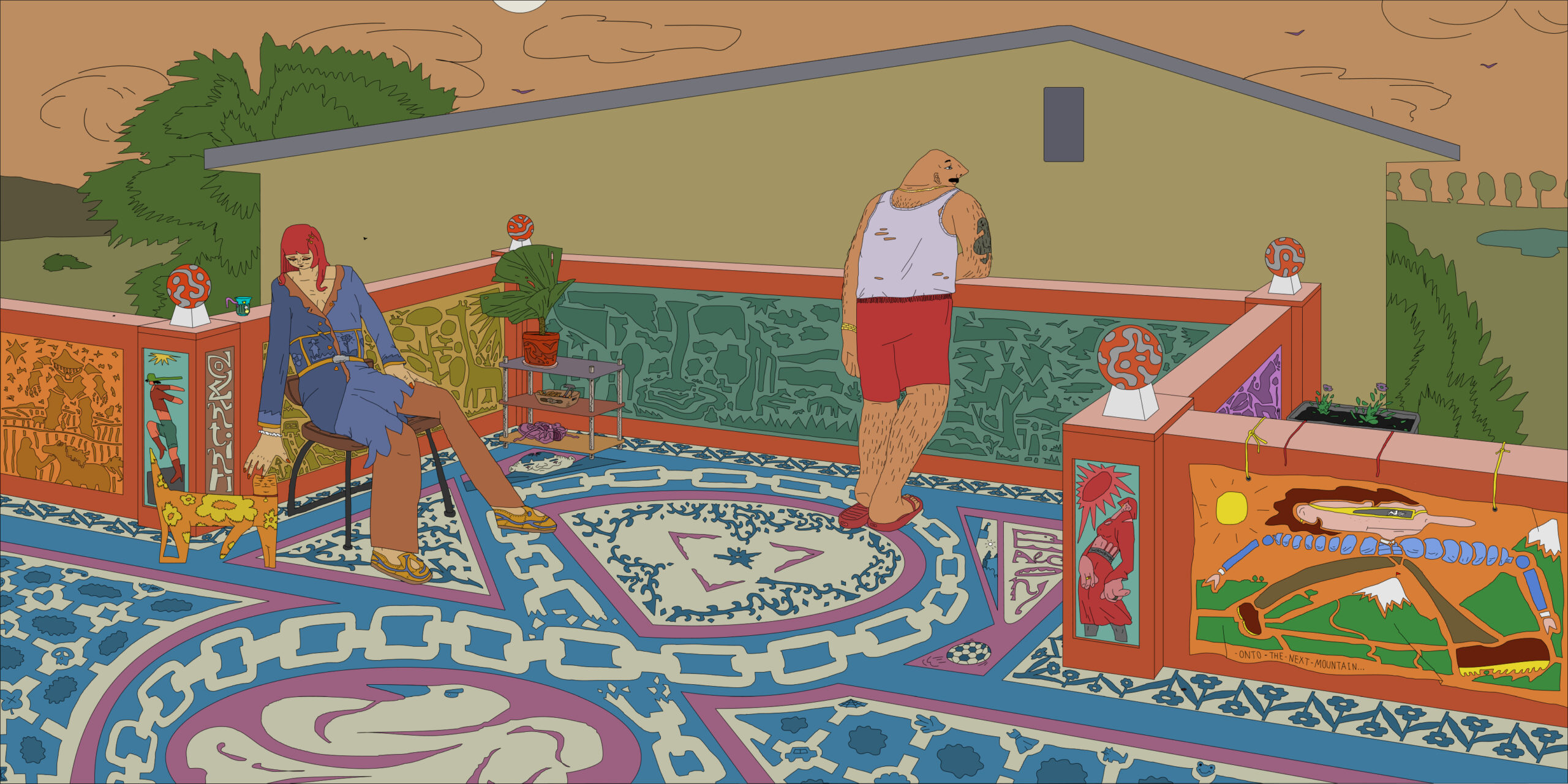
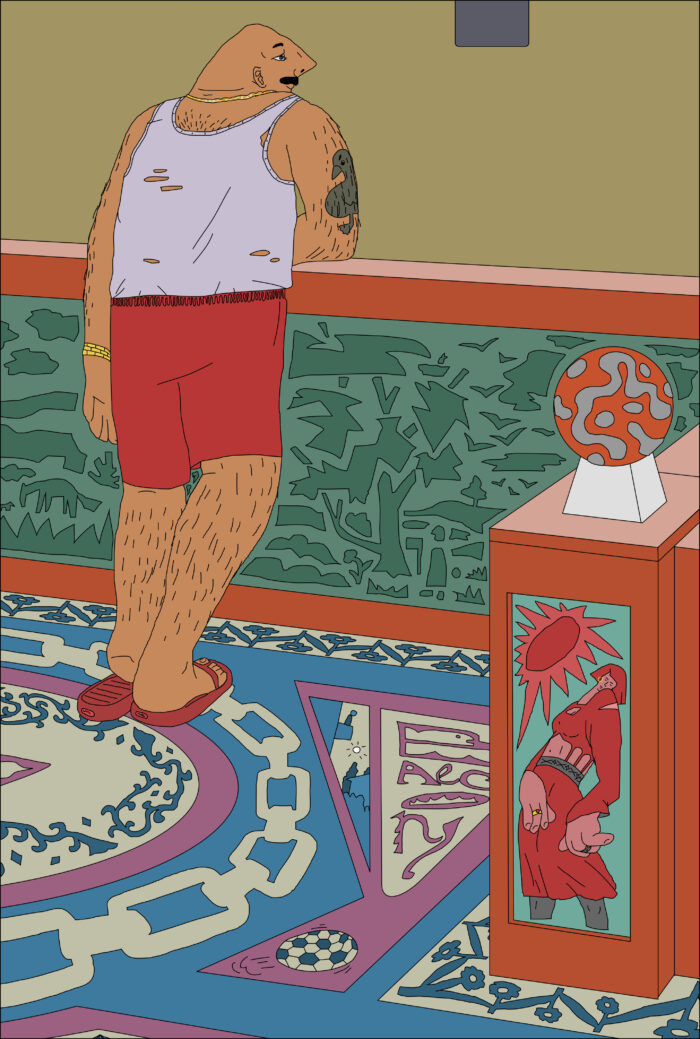
Summer Balcony is a personal work that took many months to complete and is one of my favorites. A hazy summer afternoon finds two figures relaxing on a balcony where a plethora of overdecoration covers every surface. The picture depicts a moment of hazy stillness executed in a busy and stylized way.
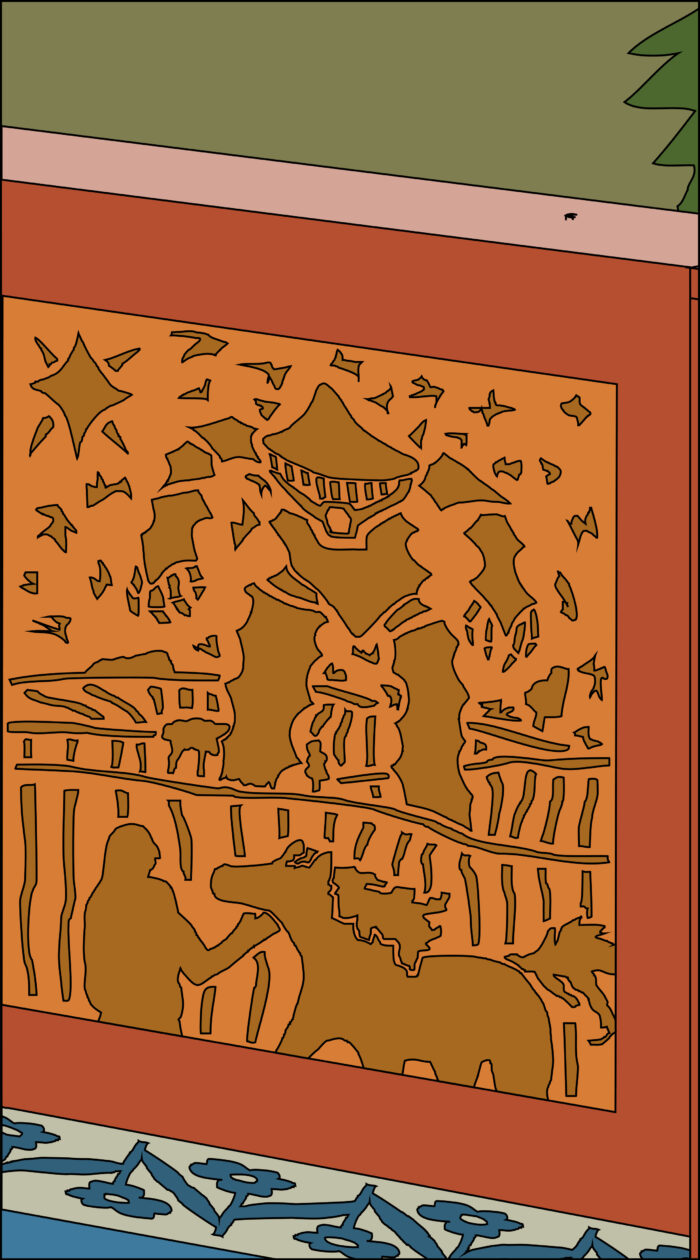
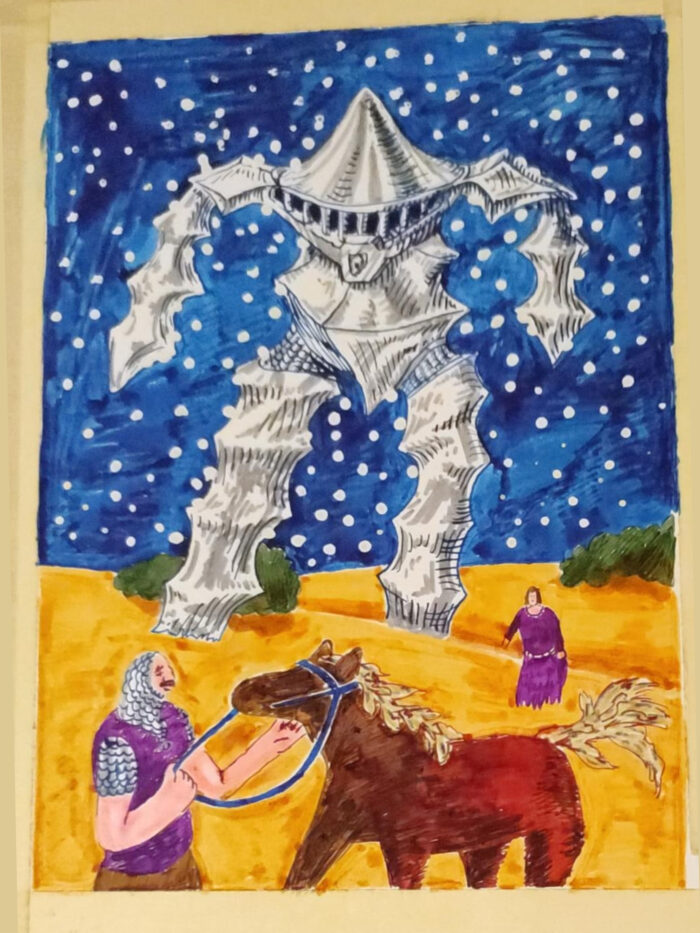
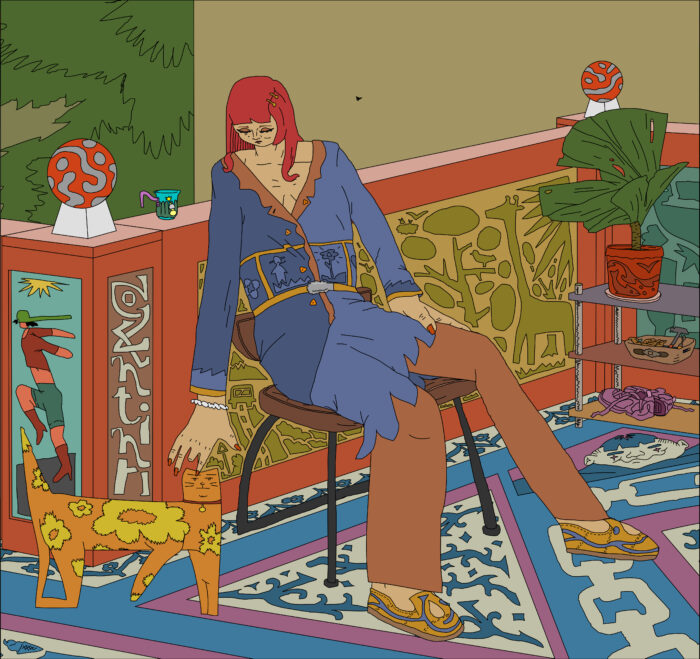
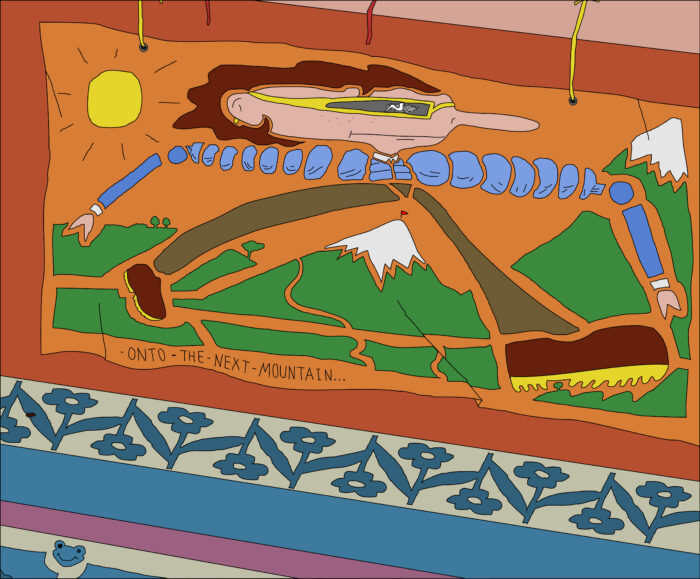
These decorative elements that plaster the floor and walls of the balcony offer both a characterization of the couple, who presumably are in their own home, and made these architectural choices. The decor also frames them and leads our eye toward the two figures. The different sections of the balcony have different colors or shape languages, but all are reminiscent of mural techniques like mosaic or relief. At the same time, the flat shapes and varying saturated colors make each “mural” feel like it could be considered an individual panel or image within the larger composition. Which is something that I always try to explore in most of my personal work. I call this type of image in which the viewer reads a non-sequential collection of images, separated or not by visible boundaries, within a larger composition – Arrangement Illustration.
Within this arrangement, placed within a scene, are nods to nature, myth, adventure, kitsch, and the neighborhood of my Romanian grandfather and late grandmother. While most of these are meant to be left to interpretation, I will highlight a few of the areas that the understanding of which, I feel, add to the complexity of this busy illustration. The first of which would be the green panel, which is the largest of the railing panels. The naive and intentionally non-overlapping shapes make up a mosaic-like landscape complete with 2 anteaters, a waterfall, a lumberjack about to cut down a tree, and an angel with boots. One side of the panel shows the beauty of nature, and the other shows the influence of humans within that.
This is also the case in the yellow panel to the left, where one side depicts a giraffe among the trees, and the other shows a car on a road. These are mild pro-environmental juxtapositions, of course, but in these two panels, I was primarily thinking about the contrast between nature and humans from a general thematic standpoint.
The view from the balcony is an expansive landscape covered by a neighboring house, as is often the case in residential areas. The house is also a compositional guide. It frames the two characters, and the slant of the roof mimics the angle between their faces. This building is plain and undecorated, contrasting with the balcony, and creating a space for the man to look into the distance, despite there being nothing of interest. The further the eye goes from the foreground within this landscape, the less detailed things become. By the time we reach the clouds, they don’t even have a shape, just broken lines that suggest form. Also, this landscape is much less saturated than the balcony, as if it were decorated in this way to make up for the lack of interesting surroundings.
The general message I attempted to convey with this illustration is a positive exaggeration of the transitional Eastern European home, where it is constructed using modern materials, but still has a focus on decoration and traditional motifs like a home found in the Romanian countryside would have. This style of well-meaning but perhaps misguided or naive aesthetic choices makes for some interesting and memorable buildings that can be seen throughout Eastern Europe, but especially in various neighborhoods of my hometown, Bucharest.